What needs to be prepared for a traditional Sundanese wedding is generally divided into: concept & traditional procession, attire & makeup, ceremonial items, human resources (pemaes/MUA, MC, musicians), and event logistics. Here’s a practical checklist.
1) Decide the format of the traditional ceremony
Sundanese weddings offer several options—decide early so vendors can adjust accordingly:
- Marriage ceremony (akad) + reception + traditional procession (most common)
- Separate akad, reception with traditional elements
- Full traditional rituals or core rituals only (e.g., sawer, nincak endog, huap lingkung)
Also determine:
- Venue (home/hall/hotel), indoor or outdoor
- Time (morning/afternoon/evening)
- Number of guests (affects duration and flow)
2) Common Sundanese traditional rituals (choose as needed)
Not all are mandatory, but these are the most commonly used:
- Mapag Panganten (welcoming the couple; often accompanied by music)
- Buka Pintu (symbolic poetic dialogue)
- Saweran (throwing rice/money/candy as a symbol of prosperity and blessings)
- Nincak Endog (the groom steps on an egg, then the bride washes his foot; symbolizes responsibility and purity)
- Meuleum Harupat (burning a stick; symbolizes emotional control)
- Huap Lingkung (feeding each other; symbolizes mutual care)
- Pabetot Bakakak Hayam (pulling apart roasted chicken; symbolizes prosperity and togetherness)
If you want a “strong Sundanese feel” but still simple, the usual core package is:
Mapag Panganten + Saweran + Nincak Endog + Huap Lingkung + Bakakak Hayam
3) Essential ceremonial items
This part can be confusing—usually provided by the pemaes or wedding organizer, but you should still confirm all items.
For Mapag Panganten (welcoming)
- Escort props (royal umbrella, spears—optional depending on package)
- Music: degung/angklung/traditional ensemble (optional)
For Saweran
- Container (bokor/tray)
- Contents: yellow/white rice, sliced turmeric/flowers, coins or cash, candies (based on family tradition)
- Cloth/scarf for the ritual
For Nincak Endog
- Raw egg
- Base (plate/banana leaf) and cloth
- Water for washing feet + container (pitcher/bowl)
- Candle (optional, depending on variation)
For Meuleum Harupat
- Harupat (small stick/straw)
- Burning container + lighter/fire
- Water container to extinguish
For Huap Lingkung
- Yellow rice or white rice (often small tumpeng style)
- Side dishes (usually chicken/fish) + plate and spoon
- Napkins
For Bakakak Hayam
- Whole roasted chicken (split in half)
- Serving plate
Additional items sometimes included
- Siraman (flower water, cloth, bathing items, offerings depending on family tradition)
- Seserahan (gift items, depending on agreement between families)
4) Attire & makeup (couple + family)
Bride & Groom
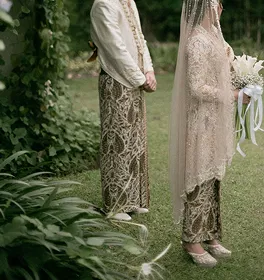
- Sundanese traditional attire (commonly: Siger crown for the bride; beskap/salontreng for the groom—varies by style)
- Accessories: siger, jasmine garlands, necklace, bracelets, keris (optional), etc.
- Comfortable footwear (since you’ll be standing a lot)
Parents & immediate family
- Coordinated outfits (kebaya, pangsi/beskap) for cohesive photos
- Makeup/hairdo (optional but highly recommended for documentation)
Make sure to do fitting and makeup trials, as Sundanese makeup tends to be bold and each MUA has a different style.
5) Key vendors for Sundanese tradition
- Pemaes (traditional stylist & ritual guide): crucial, as they lead the sequence of rituals
- MC / traditional ceremony host: sometimes handled by the pemaes, sometimes separate
- Musicians (degung/traditional ensemble) if using live accompaniment
- Wedding organizer / day-of coordinator to manage timing and coordination
6) Prepare the rundown & timing
Sundanese rituals can take 20–60 minutes depending on completeness. Prepare:
- Couple’s entrance sequence
- Ceremony positioning (stage or aisle center)
- Family photo session timing (usually after the rituals)
Tip: make sure the rituals don’t clash with catering schedules, prayer times, or guest session changes.
7) Documentation: request a ritual “shot list”
Because these moments happen quickly, ensure your photo/video team captures:
- close-ups of saweran,
- egg stepping and foot washing,
- burning harupat,
- huap lingkung,
- pulling bakakak hayam,
- parents’ reactions.
8) Commonly overlooked technical details
- Non-slip stage flooring (especially for nincak endog)
- Tissues/small towels and trash bags (for cleanup after the egg ritual)
- Clear sound system (important for poetic dialogue/buka pintu)
- Backup items (extra eggs, spare lighter)