A Betawi traditional wedding is generally divided into three main phases: pre-wedding, marriage contract (akad/ijab kabul), and reception/celebration. The exact details may vary between families (Betawi Kota vs. Betawi Pinggir) and depend on agreements and resources, but the overall sequence is usually as follows.
A. Pre-Wedding Stage
1) Ngedelengin / Ngeliat (Initial Introduction)
The groom’s family “observes” the prospective bride: meeting the family, assessing compatibility, and confirming her status and readiness for marriage.
2) Ngelamar (Proposal)
The groom’s family formally visits to express their intention to propose. This stage often includes early discussions about:
- the wedding date,
- the type of ceremony,
- and traditional requirements (dowry gifts, crocodile bread, etc.).
3) Bawa Tande Putus (Engagement / Binding Agreement)
This stage formalizes the agreement between both families. It usually includes:
- setting the date and time for the marriage contract,
- agreeing on the dowry,
- determining the form of gift offerings and other technical details.
A symbolic item (such as jewelry, a ring, cloth, or other meaningful objects) is often given as a sign of commitment.
4) Siraman / Tangas (Purification Ritual)
Some families perform a ritual bathing ceremony symbolizing purification before marriage. This may also be accompanied by a religious gathering or Qur’an recitation, depending on family traditions.
B. Marriage Contract Stage
5) Akad Nikah (Ijab Kabul)
This is the core marriage ceremony according to religion and law. It is usually held at home, in a mosque, or in a hall.
Common elements in a Betawi akad include:
- the dowry (mahr),
- prayers and marital advice,
- signing of official marriage documents.
C. Traditional & Reception Stage
6) Palang Pintu (Iconic Betawi Tradition)
A “gatekeeping” ritual before the groom meets the bride. It typically features:
- poetic exchanges (pantun), often humorous and meaningful,
- martial arts performances,
- recitation of shalawat (in some versions),
and ends with the symbolic “opening of the gate,” signifying the groom’s acceptance.
7) Ngarak Pengantin (Wedding Procession)
The groom is escorted to the bride’s home or venue, accompanied by:
- rebana or hadrah percussion,
- tanjidor ensemble,
- or other Betawi traditional music, depending on the concept.
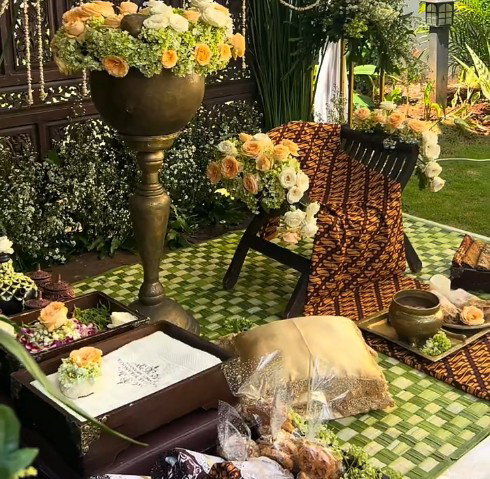
8) Serah-serahan (Gift Presentation)
The groom’s family presents gifts to the bride’s family. Typical Betawi items include:
- crocodile bread (roti buaya), symbolizing fidelity,
- traditional cakes and foods,
- prayer items,
- clothing, fabrics, or jewelry,
- fruits.
The number and contents depend on family agreements.
9) Roti Buaya (Meaning and Highlight)
Crocodile bread is often a centerpiece during the gift presentation. It symbolizes loyalty and responsibility in marriage.
10) Buka Pintu / Entrance Ceremony
After the palang pintu, the couple enters the venue and is welcomed by the family, followed by the reception program.
11) Reception Traditions: Greetings & Photos
Similar to typical receptions: greeting guests, family photos, and dining. In Betawi weddings, traditional music and attire play a strong role in creating the atmosphere.
D. Common Supporting Elements
- Attire: The groom often wears dandanan care haji (robe, turban or cap), while the bride wears a kebaya with traditional Betawi styling.
- Ondel-ondel: Sometimes present as entertainment or welcoming figures (optional).
- Music: Tanjidor, Gambang Kromong, or Rebana ensembles.
- Betawi Pantun: Adds liveliness, especially during the palang pintu ceremony.