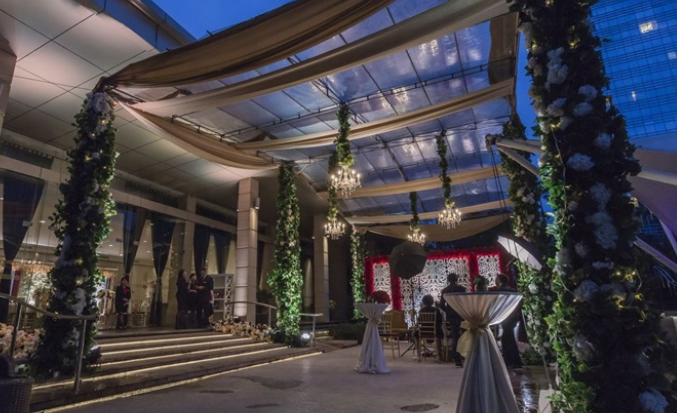
Traffic conditions in Jakarta play a surprisingly large role in shaping wedding schedules, venue choices, and guest experiences. When people think about wedding planning, they usually imagine flowers, venues, guest lists, or decoration concepts. In Jakarta, however, there is another factor that quietly influences almost every part of the wedding experience: traffic. While guests may only think about congestion when driving to the venue, wedding organizers know that traffic conditions in the city can shape an entire wedding timeline from beginning to end.
Unlike destination weddings where events often happen within one integrated location, Jakarta weddings involve constant movement between multiple points across the city. Makeup artists travel between hotels and homes before sunrise, vendors transport equipment through busy roads, photographers move between preparation locations, and guests arrive from different areas at the same time. Because of this, traffic becomes more than a transportation issue—it becomes part of the operational strategy behind the wedding itself.
Many couples are surprised to learn how heavily venue selection is influenced by accessibility rather than aesthetics alone. A visually beautiful ballroom may become difficult to manage if guest routes are too complicated or if surrounding roads are known for severe congestion during peak hours. Wedding planners often spend significant time analyzing travel patterns before recommending schedules, especially for large weddings with hundreds of attendees arriving simultaneously.
Timing also becomes extremely strategic in Jakarta weddings. Ceremonies and receptions are frequently scheduled around traffic flow rather than purely around tradition or preference. Afternoon weddings may begin slightly later to avoid office rush hours, while evening receptions often account for weekend congestion in busy districts like Sudirman, SCBD, or Kuningan. Some couples even choose hotel venues specifically because guests can stay overnight and avoid long commutes after the event ends.
Traffic affects vendors just as much as guests. Decoration teams often begin installations late at night or early in the morning to avoid transportation delays. Makeup artists sometimes leave home before dawn to ensure they arrive on time for preparation sessions. Wedding organizers regularly build “buffer time” into timelines because even small delays can create chain reactions affecting photography schedules, entertainment flow, and guest seating arrangements.
Interestingly, Jakarta’s traffic culture has also influenced the structure of weddings themselves. Many modern receptions now prioritize efficiency and smoother guest movement. Registration systems, valet services, digital guest tracking, and clearer venue layouts are becoming increasingly important because couples want to minimize stress for attendees navigating the city.
Hotel ballrooms remain especially popular partly because they solve multiple logistical problems at once. Guests, families, and vendors can operate within the same location, reducing unnecessary movement throughout the day. This convenience becomes highly valuable in a city where travel unpredictability can easily disrupt tightly coordinated events.
Social habits in Jakarta weddings are also shaped by traffic realities. It is relatively common for some guests to arrive later than scheduled, especially during large weekend events. Because of this, planners often create flexible reception pacing to accommodate gradual guest arrival patterns without making the ballroom feel empty too early in the evening.
Technology has become increasingly important in managing these challenges. Live location sharing, digital invitations with navigation links, real-time coordination groups, and transportation management systems are now standard parts of many wedding operations. Some organizers even monitor traffic conditions live during the event to adjust timing decisions when necessary.
Despite all the complications, Jakarta’s wedding industry has adapted remarkably well. Vendors and planners have developed highly efficient systems to manage events smoothly within one of Southeast Asia’s busiest urban environments. In many ways, the ability to coordinate large-scale weddings despite constant logistical pressure has become one of the industry’s strongest skills.
Guests may only remember the beautiful ballroom, elegant decoration, or emotional moments on stage. What they rarely see is how much of the wedding’s success was quietly shaped by road conditions, travel timing, and operational coordination happening across the city long before the reception even began.
And perhaps that is one of the most uniquely Jakarta aspects of modern weddings: behind every glamorous celebration is an invisible battle against traffic that almost nobody notices when everything finally runs smoothly.